


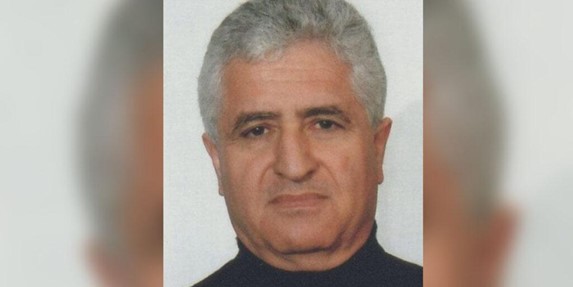
Anthen is a company based on values. Values that guide us and inspire our people.
The legacy on which our values are based is the legacy bequeathed to us by our beloved father Konstantinos (Kostas) Paipoutlidis.
A charismatic man full of ideas for today and tomorrow, who loved to share his ideas and enjoyed recounting his experiences. A man with a well-founded code of values and a rich ideological background.
He influenced us and many people around him with his life and ideas.
Anthen may not be his creation, but the company’s path and development are largely based on his values.
HIS LIFE
Childhood years
Descendant of a Pontic family, which settled after being uprooted from Pontus, in the village of Babalio, Aetolia-Acarnania. He was born in the village on 26/2/1949 and spent his childhood there.
Years marked by the pain carried by families from the wounds of Genocide and uprooting. As a child, Kostas was deeply affected by the memories shared by the elders with the younger ones about the pain and losses they experienced.
The years in Babalio were poor and difficult, as his family was a farming family struggling to make ends meet. However, they were also beautiful years because in the unique landscape of the village, children experienced a carefree and companionable daily life.
When it was time to attend high school, he relocated to Agrinio, where he was hosted by family relatives. There, he began to engage more intensely with political events. Although his father was a deeply religious and conservative man, he was more politically influenced by the stories of the EAM-ELAS guerrillas and the resistance in the mountains.
During his years in Agrinio, he began to develop political activity at a time when involvement (1962-1968) could not be carefree and always carried risks. Even from his high school years, he was attracted to center-left ideology, but could not ideologically align with either the Center Union or Communist ideals. His grandmother’s (his father’s mother) stories about the hardships they endured in the Soviet Union, leaving Pontus and before coming to Greece, made him cautious towards Communism.
Studies in Italy
He carried his ideas to Italy, where he left in 1969 to study Medicine. After first exploring the university in Sicily, he then moved to the Medical School of Florence.
He studied in the cities of Florence and Siena, but quickly realized that Medicine did not suit him and began to engage in politics. Meanwhile, the political situation in Greece with the overthrow of Democracy pushed him to engage in resistance against the Junta and the restoration of Democracy in Greece.
His involvement in student associations in Italy led him to participate in PAK Italy from its early steps. PAK was a leftist and resistance organization founded by Andreas Papandreou, which operated throughout Europe.
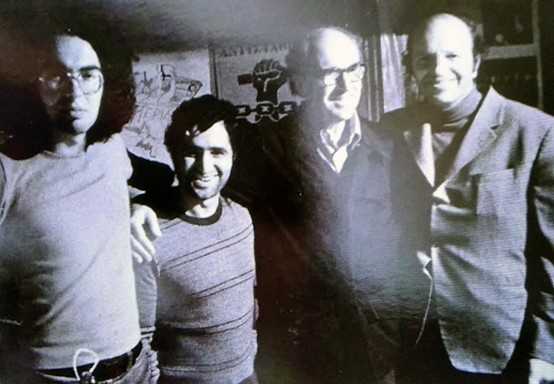
As a child, Kostas had been politically involved with the Center Union and was familiar with Andreas Papandreou’s revolutionary ideas. Andreas’s charismatic personality and the combination of leftist ideology with deep patriotism made him fully identify with PAK.
Thus, he began to evolve within PAK and stand out as one of the leading figures of PAK Italy and the student associations. He met and collaborated with a multitude of political figures who marked subsequent political events. He also worked closely with the Italian Socialist Party (PARTITO SOCIALISTA ITALIANO) and became closely acquainted with some of the most important ideological figures of Italian center-left politics.
His acquaintances and ideological fermentations deeply influenced him and began to shape him into a well-informed and knowledgeable politician. His activity in Italy continued throughout the Junta and in the early years of the Metapolitefsi.
Married life and return to Greece
During these years in Siena and Florence, he met the woman of his life, Eleni Tziogou, they married, and their first child was born in 1980.
In the early years of the Metapolitefsi, he was one of the founding members of PASOK, which was founded in 1974 to dominate the political scene in Greece in the following years.
Thus, in 1982, Kostas decided, along with his wife Eleni, to relocate to Greece and Athens. His wife was pregnant with their second child, but the challenges of the endeavor did not deter them, as the years abroad were many and they wanted to return. In Athens, their second son was born in 1982.
The election of PASOK to the government of the country played a decisive role in his decision to return. And so, although he had begun to develop a professional career in the Cooperative movement in Florence, he returned to Greece to help with his passion and knowledge in rebuilding the country after the destructive years of the Junta.
In Greece, he brought his faith and love for the Cooperative ideal. Andreas Papandreou wanted to develop the Cooperative economy in Greece, and Kostas, with altruism and ideological background, worked hard for this goal.
He traveled across Greece to instill cooperative consciousness and the ideology of collaboration, which he so strongly believed in. After all, he had experienced at a high level the impact of cooperative culture in a developed economy like Italy and had worked at COOP ITALIA and collaborated with its top executives.
His professional career
He took the leadership of SPEKA, a Cooperative company for the trade and manufacture of agricultural products. There, he organized an innovative plan to export domestic agricultural products to the Soviet Union with the aim of importing agricultural machinery from there. Kostas was a pioneer of his time, who believed in the value of Greek production and did not accept that the country should only import products from abroad. At SPEKA, he traveled the world from Europe to Taiwan and Korea, searching for ideal partners for importing agricultural machinery that met his criteria.
Politically, from the early years of his return to Greece, he was a member of the Central Committee. An idealist and passionate politician, he decided not to participate in the statist trend and the craze for power of the time. Although he was a central figure in PASOK, he did not take positions in the Public Sector or Ministries with high salaries, but decided to fight for the Cooperative ideals he so loved.
In PASOK, he was a leading figure among the Italians. A political group within PASOK, which he founded along with his comrades from Italy and his close political friend Michalis Charalambidis. Thus, while Kostas adored Andreas Papandreou, he did not let his ideological compass become confused. The Italians were guardians of Andreas Papandreou’s values, but also strong critics of the statist mentality and the indifference to domestic production that prevailed in decisions. The Italians even made strong opposition to Andreas Papandreou on many issues, mainly for what they saw as the deviation of PASOK’s policy.
After SPEKA, Kostas worked closely on the establishment and development of the Consumer Cooperative, named KATANALOTIS KONSUM-COOP. Having known the power of the Italian Consumer movement, the organization of COOP ITALIA supermarkets, and their importance for local production, he wanted to apply these ideas in Greece.
He encouraged Cooperative Unions of producers across Greece to establish supermarkets to promote local products. He also helped create consumer cooperatives throughout Greece, which also established supermarkets. Thus, the KATANALOTIS KONSUM-COOP supermarket chain was created, whose goal was always to develop cooperative consciousness and promote domestic products.
Kostas used his knowledge, connections, and work to create an organization that was far ahead of its time. At the same time, he spearheaded efforts for Greek consumer cooperatives to participate in the European organization of consumer cooperatives. He used his connections to bring European cooperative practices to the Greek territory.
In the years 1990-2000, competition in supermarkets at a nationwide level began to become intense, making it difficult to develop a cooperative supermarket chain. Although the KATANALOTIS-KONSUM brand could not survive as a venture, Kostas organized a new innovative idea in the supermarket sector. He founded one of the first purchasing groups, which initially supported KATANALOTIS KONSUM with its commercial activities.
However, when the KATANALOTIS brand began to fade, Kostas founded the purchasing group HELLENIC NUTRITION. It was a group aimed at commercially supporting the supermarkets of Cooperative Unions, but not only. HELLENIC NUTRITION was created to support every small and medium-sized supermarket business in Greece, and thus, as a group, it gathered over 1,000 stores across Greece.
Kostas founded HELLENIC NUTRITION with the aim of serving the ideals that guided him. The development of cooperatives, small businesses, and the promotion of Greek products. In HELLENIC NUTRITION, he passionately promoted the idea of creating Greek private label products, being a pioneer once again.
In politics, he was destined to close the chapter of his close involvement with events at the PASOK Congress in June 1996, where Kostas Simitis was elected president. At that Congress, as a member of the Electoral Committee, he witnessed the process up close and decided that PASOK’s political direction no longer suited him. At the same time, the death of Andreas Papandreou closed a major political chapter in Kostas’s life. However, he remained a member of PASOK until the end of his life and occasionally advised central political figures of the party, without possessing the same political passion and intense involvement as he did until 1996.
In those years after 1996, he devoted himself to his corporate activities. After his involvement with HELLENIC NUTRITION, he served as CEO of the Cooperative Insurance. He also tried to promote the cooperative idea in the Insurance sector and the collaboration of cooperatives throughout Greece. At the same time, he brought the cooperative insurance UNIPOL to Greece (which was and is one of the largest insurance companies in Italy and Europe) to participate as a shareholder in the Cooperative Insurance. His main idea was to transmit the cooperative consciousness of Italy to Greece, and he fought for the participation of Italians in the company’s affairs.
In the next chapter of his professional career, he decided to support the economy of his place of origin, Western Greece. In collaboration with his brother Stefanos Paipoutlidis, they created an innovative supermarket chain in Western Greece, based in Agrinio. For this venture, he collaborated with a modern Italian cooperative company named SISA. The business they created was once again destined to be pioneering. With the ally of Italian know-how, they created an innovative franchise store system, long before it became successful in Greece. SISA HELLAS from 2005-2010 launched private label products aimed at bonding with consumers, as well as innovative customer loyalty plans in years when they were still unheard of in Greece.
The corporate stores and franchise stores of SISA HELLAS were supported by a new purchasing group founded by Kostas, MESIS HELLAS, which was destined to be his last corporate venture. In MESIS HELLAS, he continued to try to embrace small businesses throughout the territory.
In 2010, Kostas left SISA HELLAS and decided to focus on developing the MESIS purchasing group. He worked with love for the needs of the small market until the end of his professional career in 2019. Until the last years of his professional career, he made efforts to revive and support the cooperative ideal and local production.
Values and ideas that accompanied him until the end of his life on June 23, 2024.
He was a tender and beloved father and grandfather. He offered love without expecting anything in return and loved to recount his stories. To tell them to his children and then to his grandchildren.
But not only. He loved dialogue and touched many people across Greece with his discussions and ideas. His selfless and pure contribution to his country was invaluable.
The love for Kostas and his ideas continues to be expressed in his family and keeps his ideas alive.
Anthen is based on his values.
- Cooperativeness,
- diligence,
- support for local productions,
- faith in innovation,
- and cultivation of ideas.
The memory of Kostas Paipoutlidis lives on in his family (in age order), his wife Eleni, his sons Nikos and Andreas, his daughters-in-law Katerina and Aliki, and his grandchildren Eleni, Kalliopi, Konstantina, Elena, and Aphrodite.